
sales@medlinepharma.com
+1(774)-537-5075
Los Angeles, CA, USA 90005
May 18, 2026
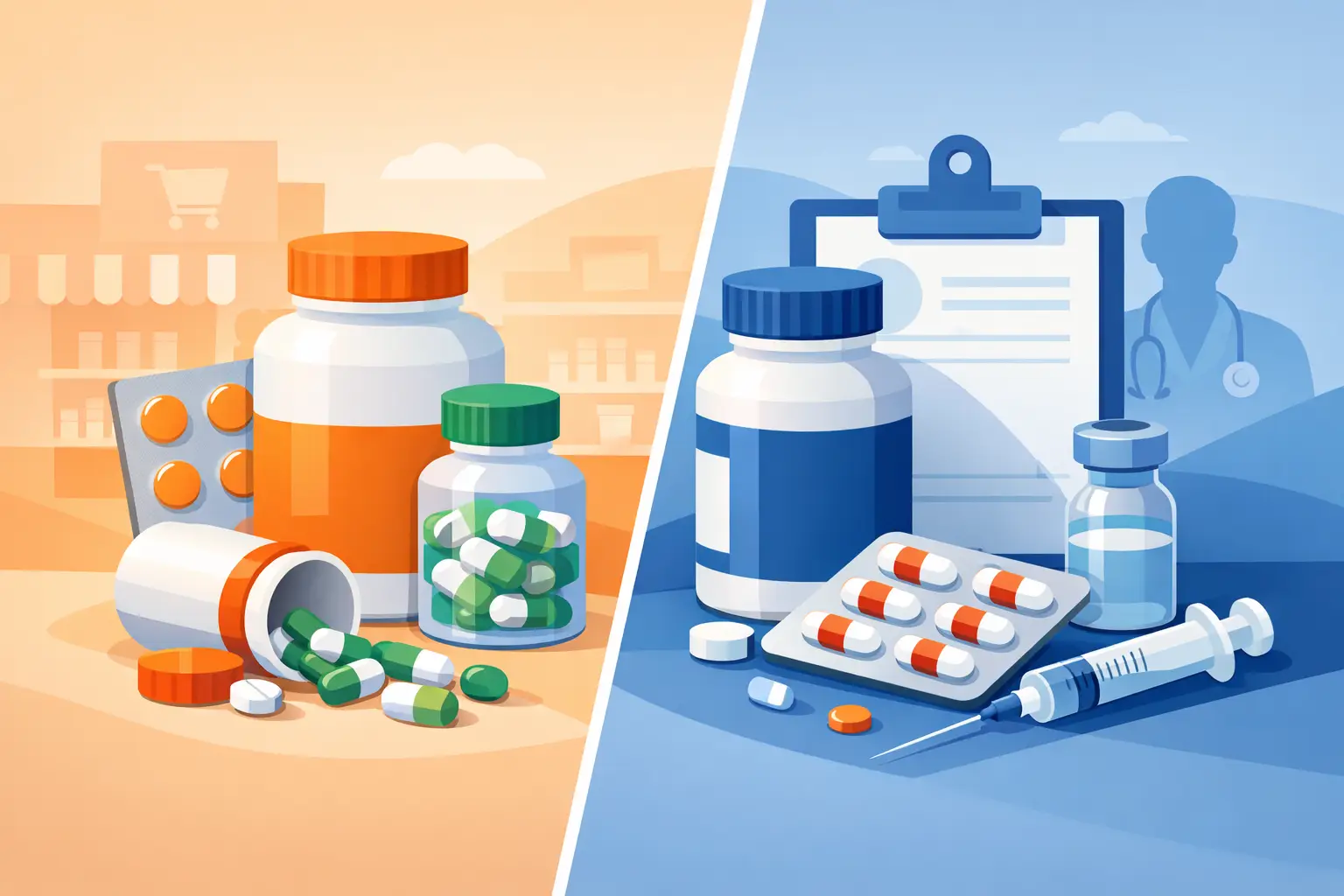
You wake up with a pounding headache, a cough that will not quit, or a rash that suddenly looks worse than it did last night. That is usually when the question gets real – otc medicine vs prescription medicine is not just a pharmacy category issue, it is a decision about speed, safety, cost, and how much oversight you actually need.
For many adults, over-the-counter options are the first move because they are fast, familiar, and easy to buy. Prescription medicine enters the picture when symptoms are more serious, last longer, or involve drugs that need tighter control. The smart choice is not always the stronger one. It is the one that matches the problem in front of you.
The basic split is straightforward. OTC medicine can be sold directly to consumers without a prescription because regulators have determined it is generally safe and effective when used as directed for common, self-limited conditions. Prescription medicine requires authorization from a licensed prescriber because it carries higher risks, needs diagnosis or monitoring, or can be misused more easily.
That distinction affects more than the checkout process. It changes how much guidance you need, how side effects are managed, how doses are tailored, and whether the medicine is appropriate for your age, health history, or other medications.
An OTC pain reliever for a mild fever is built for broad public use with label-based instructions. A prescription blood pressure medication is different. It may need dose adjustments, follow-up checks, and attention to kidney function, drug interactions, or pregnancy risk. One is designed for everyday self-care. The other is designed for supervised treatment.
OTC products are often the right answer for short-term, uncomplicated issues. Think headaches, seasonal allergies, mild heartburn, occasional constipation, minor muscle aches, simple cold symptoms, or basic first-aid needs. These are the situations where convenience matters and where waiting for an appointment can feel unnecessary.
That convenience is the biggest reason OTC products remain popular. You can compare options quickly, choose what fits your symptoms, and start relief the same day. For shoppers who value privacy and speed, that matters. You do not need to explain a minor issue to three different people just to get a standard remedy.
There is also a cost advantage in many cases. OTC products can be cheaper upfront than paying for a doctor visit plus a prescription, especially for routine symptoms. Generic store-brand versions often deliver the same active ingredient at a lower price.
Still, easy access does not mean zero risk. Acetaminophen can harm the liver if you take too much. NSAIDs like ibuprofen can irritate the stomach or affect kidneys. Decongestants can raise blood pressure. Even common antihistamines can make you drowsy enough to affect driving. OTC does not mean harmless. It means safe enough for self-use when directions are followed.
Prescription drugs exist for a reason. Some conditions need a confirmed diagnosis before treatment. Others require medicines that can cause serious side effects, dependence, or dangerous interactions if used casually.
If you have a bacterial infection that needs antibiotics, severe asthma symptoms, uncontrolled diabetes, chronic pain managed with restricted drugs, or mental health symptoms that require a targeted medication, prescription treatment is often the appropriate path. In these cases, the value is not just access to a stronger product. It is professional evaluation and a treatment plan that fits the condition.
Prescription medicine can also be necessary when OTC treatment has already failed. If you have taken heartburn medication for weeks and symptoms keep coming back, or if a cough lasts too long, gets worse, or comes with shortness of breath, moving beyond self-treatment is not overreacting. It is common sense.
There is another point people sometimes miss. Prescription medicine is not automatically better because it is regulated more tightly. Some prescription drugs have a narrow benefit window, major side effects, or a high misuse potential. That is exactly why they are prescription-only. Access is restricted because the margin for error is smaller.
The real tension in otc medicine vs prescription medicine comes down to freedom versus supervision. OTC products give you control. You can act fast, shop privately, and avoid delays. Prescription drugs add clinical oversight, which can be essential, but they also add friction.
For some buyers, that friction is the hardest part. Scheduling an appointment, dealing with insurance, answering personal questions, and waiting for fulfillment can be frustrating when you just want relief. That is why discreet online pharmacy services appeal to so many adults. Convenience is not a luxury when you are in pain, managing a chronic condition, or trying to handle a sensitive health issue privately.
But supervision has value when the stakes are higher. It can catch a wrong diagnosis, prevent duplicate therapy, or stop a dangerous interaction before it starts. If you are taking multiple medications, are pregnant, have liver or kidney disease, or have symptoms that are severe or unusual, extra oversight can protect you.
The practical move is to know when convenience is enough and when it is not.
Start with the symptom itself. If it is mild, familiar, and short-lived, OTC treatment may be reasonable. If it is severe, new, rapidly worsening, or tied to a known medical condition, a prescription evaluation may make more sense.
Next, look at duration. A small problem that clears in a day or two is different from one that keeps returning. Ongoing symptoms often need more than symptom suppression. They need a diagnosis.
Then consider your own risk factors. A cough suppressant that works fine for one person may be a poor choice for someone with certain medications or underlying disease. The same goes for sleep aids, stimulants, pain relievers, and allergy products.
Finally, read labels like they matter, because they do. Check the active ingredient, not just the brand name. Many people double-dose by combining cold, flu, and pain products that contain the same ingredients. That is one of the most common avoidable mistakes in self-medication.
People often assume the danger sits only on the prescription side. That is not accurate. Both OTC and prescription medicines can be safe or unsafe depending on how they are used.
With OTC products, the biggest issues are overdosing, mixing products with the same ingredients, using them too long, or ignoring warnings about health conditions. With prescription medicine, the bigger risks are wrong dosing, dependency with certain drug classes, stopping abruptly without guidance, or sharing medicine with someone else.
This is where pharmacist support matters. Quick access is valuable, but clear guidance is what turns access into safer use. A good pharmacy experience should not make you choose between privacy and support. You should be able to get both.
For a mild headache after a long day, OTC is usually enough. For migraines that keep recurring or bring vision changes, prescription evaluation may be needed.
For seasonal sniffles, OTC antihistamines and nasal sprays are often practical. For symptoms that are severe, persistent, or tied to asthma, a prescription approach may be more effective.
For occasional heartburn after heavy food, OTC products can work well. For frequent reflux, chest discomfort, trouble swallowing, or symptoms that keep returning, it is time to move past guesswork.
For pain, the line can get more complicated. Mild strains or temporary soreness may respond well to OTC options. Severe pain, post-procedure pain, nerve pain, or chronic pain management often falls into prescription territory because the treatment has to be individualized and monitored closely.
Healthcare decisions do not happen in a vacuum. Price, privacy, availability, and delivery speed all influence what people choose. A medicine can be appropriate on paper and still feel out of reach if the process is slow, expensive, or invasive.
That is why online pharmacy access has changed behavior. People want discreet ordering, transparent pricing, home delivery, and fewer barriers between the need and the product. For eligible purchases, that model can make staying on top of basic health needs much easier. Medline Pharma speaks directly to that demand by focusing on convenience, confidentiality, and access without making the process feel complicated.
Still, access works best when paired with judgment. Fast delivery is useful. So is knowing when a symptom has crossed the line from routine to risky.
The better question is not whether OTC or prescription medicine is superior. It is whether the medicine fits the moment, the symptom, and your personal risk. When you choose with that mindset, you are not just buying faster. You are buying smarter.