
sales@medlinepharma.com
+1(774)-537-5075
Los Angeles, CA, USA 90005
May 18, 2026
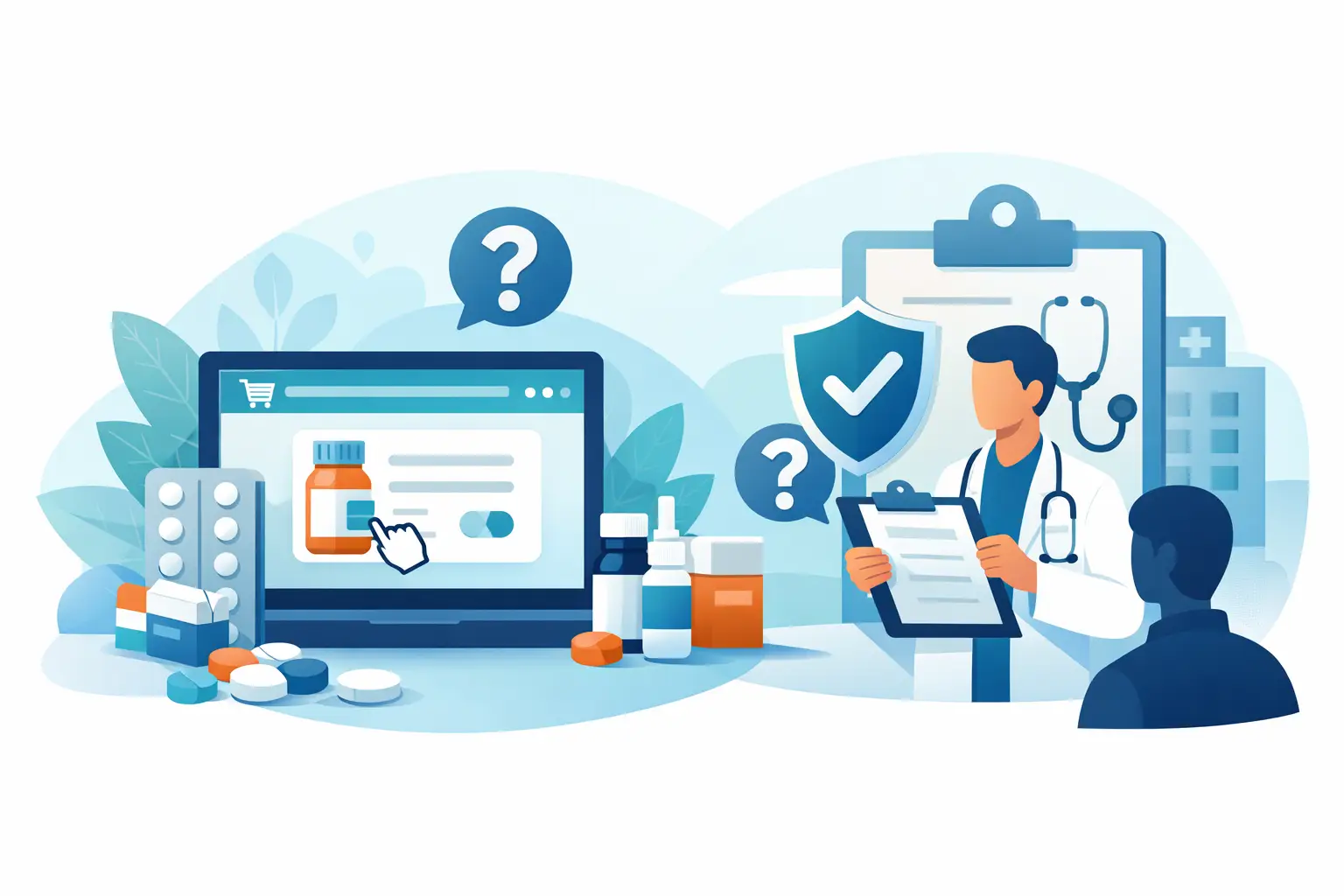
If you are shopping for medication online, the first question is usually the simplest one: do online pharmacies need prescriptions? The honest answer is yes for many drugs, no for some products, and it depends on what you are buying, where the pharmacy operates, and how the order is being fulfilled. That matters because the difference affects speed, privacy, price, and whether your order gets approved without extra back-and-forth.
For most buyers, this is not just a legal technicality. It is about convenience. Nobody wants to load up a cart, enter payment details, and then find out a prescription is required after checkout. If you want a smooth order, you need to know which categories typically require a valid prescription, which ones are commonly sold without one, and what a legitimate online pharmacy should make clear before you buy.
No. Online pharmacies do not need prescriptions for every product they sell. Many health and wellness items are sold over the counter, just like they would be in a retail drugstore. That includes common supplements, vitamins, allergy products, first aid supplies, some pain relievers, sleep aids, digestive support products, and personal care items.
Prescription rules usually apply to medications that are regulated because of strength, risk profile, side effects, potential interactions, or abuse potential. Drugs for blood pressure, antibiotics, stronger pain relief, anxiety, hormone treatment, and many chronic care medications are often in this category. Controlled substances face even tighter restrictions, and reputable sellers usually have stricter verification steps around them.
So if you are asking whether online pharmacies need prescriptions, the better question is: for which products? The answer changes from one category to another.
Prescription requirements are meant to create a checkpoint between the product and the patient. Sometimes that checkpoint is useful. Some drugs can interact badly with other medications, worsen existing conditions, or require monitoring for dosage and side effects. In those cases, a prescription is not just bureaucracy. It is part of safe use.
That said, buyers often run into frustration because the process can feel slow and outdated. Waiting for an office visit, getting paperwork sent over, and dealing with refill delays is exactly why so many people look online in the first place. They want home delivery, more privacy, less friction, and access on their schedule.
This is where online pharmacies have changed the experience. Even when a prescription is required, the process can be faster and easier than a local pharmacy if the platform clearly explains what is needed, offers prescription upload options, and provides responsive support.
There is no single universal list that covers every seller, but in general, medications in these categories often require a prescription: antibiotics, blood pressure medication, antidepressants, stronger pain medication, ADHD drugs, hormone therapies, erectile dysfunction treatments in some cases, and many medications used for chronic disease management.
Controlled drugs are a separate issue. These products are more heavily regulated, and buyers should expect stricter handling, identity checks, and limited fulfillment options. If a site treats high-risk medication exactly like a bottle of vitamins, that should make you pause.
On the other hand, products like multivitamins, herbal supplements, basic cold and flu support, anti-inflammatory pain relievers, topical creams, testing kits, and general wellness products are commonly available without a prescription.
Sometimes, yes. But this is where buyers need to pay attention.
Some online pharmacies focus on over-the-counter products and never need a prescription at all. Others combine prescription fulfillment with categories that can be purchased directly. There are also platforms that operate with looser access models, especially for products that fall into gray areas, niche chemical categories, or products not handled the same way as mainstream retail pharmacy inventory.
That does not automatically mean every non-prescription offer is unsafe or fake. But it does mean the buyer has to be more alert. A trustworthy operation should be clear about what is being sold, how it is shipped, what support is available, and whether pharmacist guidance or product information is offered when needed.
For privacy-focused customers, the appeal is obvious. Fewer barriers, discreet packaging, and direct ordering can make a huge difference. But convenience is strongest when it comes with transparency, not confusion.
The easiest answer is to check the product page before you start the order. A well-run online pharmacy should state whether a prescription is required, accepted, or not necessary. It should also explain how to submit one if needed.
If those details are vague, missing, or only appear at the very end of checkout, that is a red flag. The same goes for websites that make sweeping claims that everything is available with no restrictions, no questions, and no verification across every category. Real inventory does not work that way.
Look for practical signs of a more dependable process. Product descriptions should identify the item clearly. Support options should be easy to find. Shipping expectations should be stated upfront. If prescription fulfillment is offered, there should be a clear path for upload, review, or transfer.
For buyers who value privacy, clarity matters just as much as confidentiality. You want to know what happens before you pay.
Pharmacist support is helpful, but it does not replace prescription requirements where they apply. A pharmacist can answer questions, explain usage, discuss interactions, and help guide fulfillment. That is valuable, especially when you are ordering from home and want fast answers without an in-person trip.
Still, if a medication legally requires a prescription, pharmacist support usually works alongside that requirement, not around it. Think of it as an added layer of help rather than a workaround.
Where pharmacist support really improves the experience is in reducing delays. If your order needs clarification, refill coordination, or basic guidance, strong support can keep things moving. For online buyers, that can be the difference between a simple transaction and a frustrating one.
Most customers are not trying to become pharmacy law experts. They want to know three things: can they get the product, how much trouble will it take, and will the order stay private?
That is why this question keeps coming up. Do online pharmacies need prescriptions is really a question about control. Buyers want the freedom to manage their health purchases without unnecessary friction, especially for recurring needs, sensitive products, or items they would rather not discuss face-to-face.
A platform that understands that will make the process simple. It will separate prescription items from non-prescription ones, explain requirements without legal fog, and provide support that feels useful instead of obstructive. For many buyers, that is the whole point of shopping online.
There is always a trade-off. More access usually means less gatekeeping. Less gatekeeping can feel faster and more private, but it also puts more responsibility on the buyer to know what they are purchasing and how to use it.
That does not mean convenience is a bad thing. It means smart buyers treat convenience as a benefit, not a substitute for judgment. If you are ordering a basic wellness item, the risk is lower. If you are buying something potent, habit-forming, or medically sensitive, the stakes are higher.
The best online pharmacy experience respects both realities. It does not bury the process in delays, but it also does not pretend every product should be sold the same way.
A modern online pharmacy should do more than list products and take payment. It should make access easier while still giving buyers enough information to make a confident decision. That means clear labeling, discreet delivery, reliable support, transparent pricing, and a checkout experience that tells you exactly what is required.
For many shoppers, especially those who value privacy and speed, that is the sweet spot. You want the convenience of online ordering without surprise prescription requests, vague product pages, or hidden obstacles. Some stores, including Medline Pharma, are built around that expectation: direct ordering, confidentiality, broad product access, and support that does not disappear after the sale.
So, do online pharmacies need prescriptions? Often yes, but not always. The real answer depends on the product, the seller, and how clearly the process is explained before you buy. If the pharmacy is upfront, the shopping experience gets much easier – and that is exactly how it should be.
When you shop online for health products, the smartest move is simple: know what you are buying, know what the pharmacy requires, and choose a seller that respects your time and your privacy.